From Idea To Object
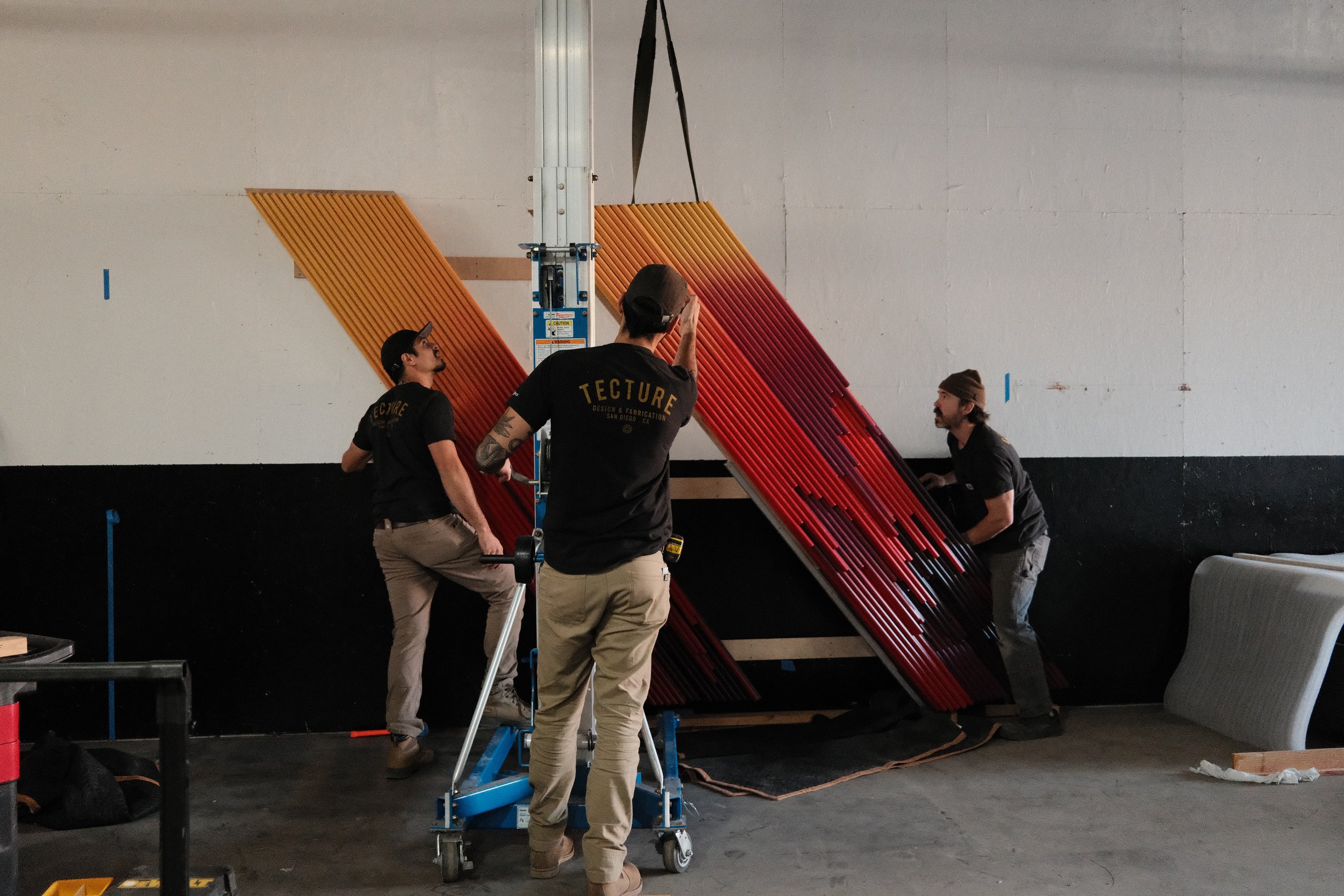
At Tecture Inc., we see art installations as more than just objects - they’re ideas translated into space, material, and experience. Our work starts with a concept, often abstract, and we guide it through every stage until it exists as a physical, functioning feature.
From Concept to Built Form
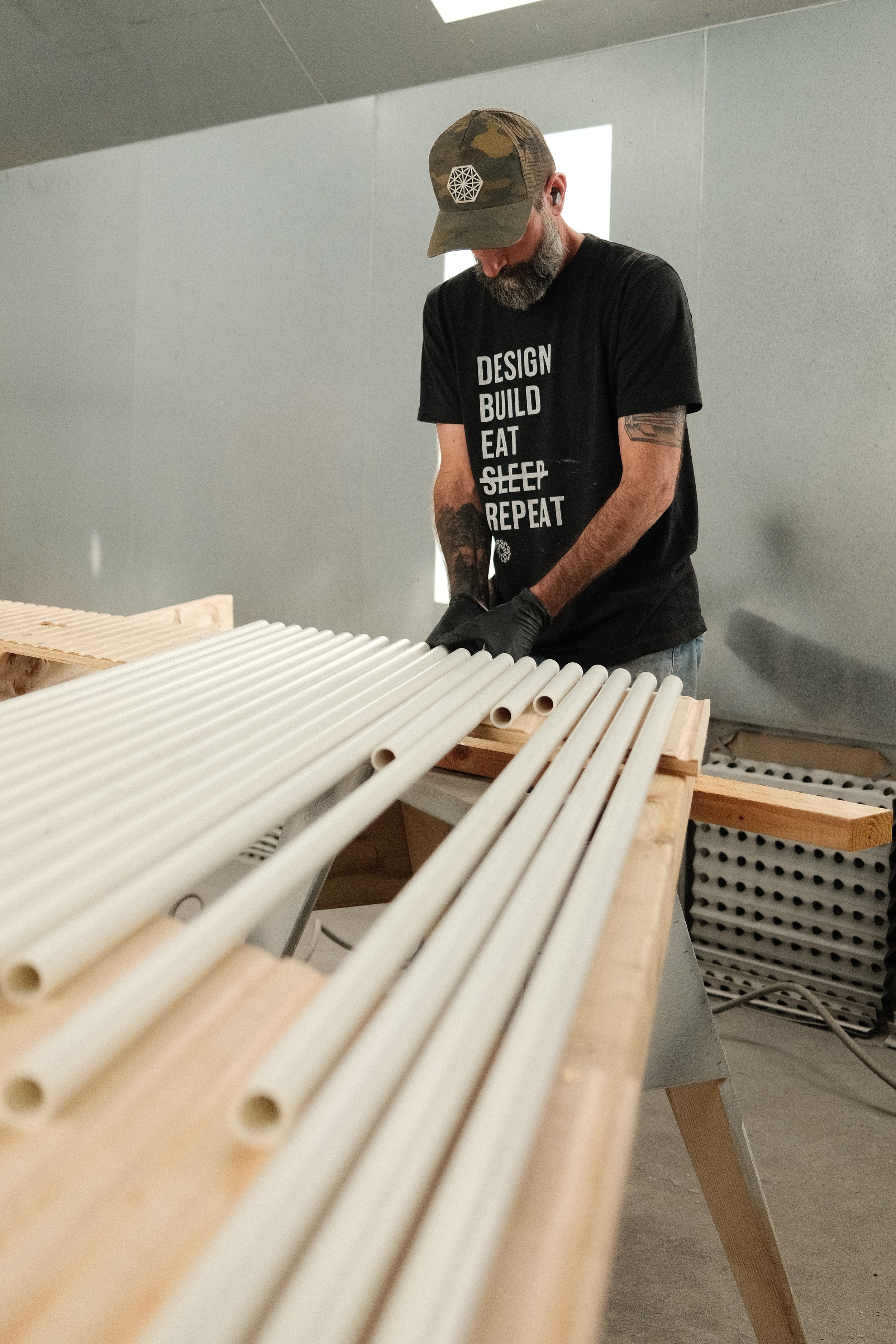
Many projects come to us in a very conceptual stage, with nothing but a clear vision. Our role is to take those ideas and turn them into something tangible.
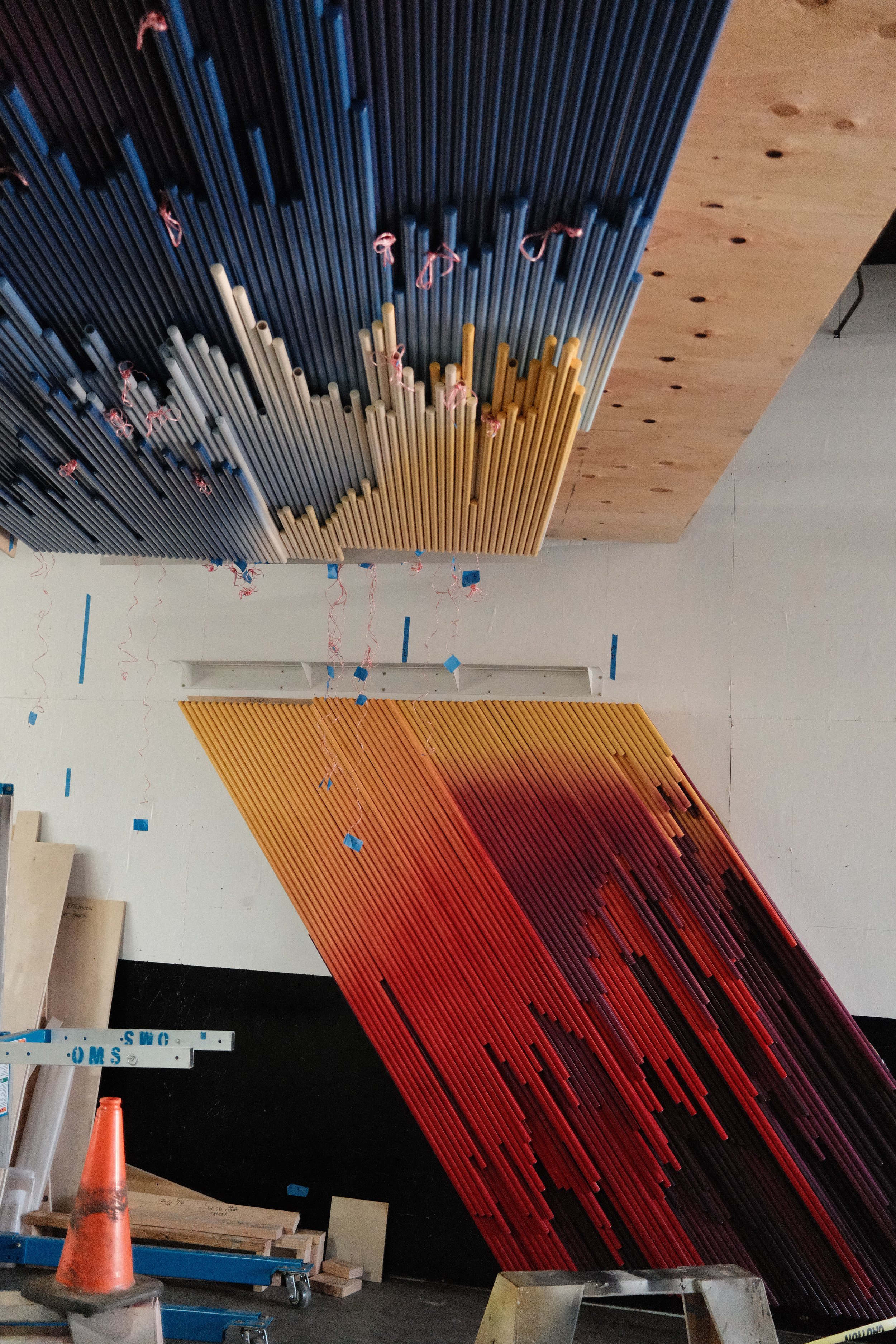
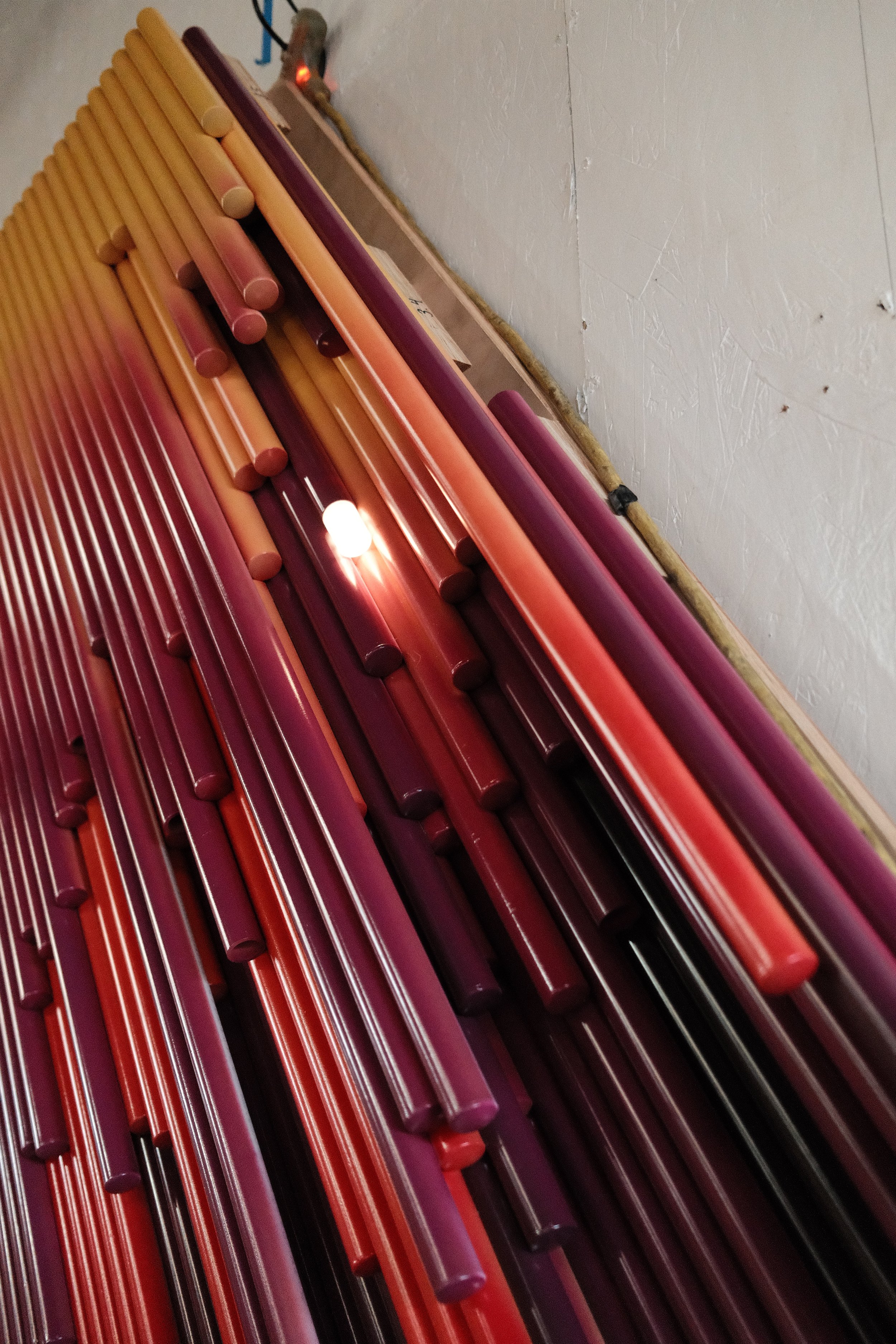
Sometimes, it’s as simple as repeating a single element - like in our UCSD installation, we were able to create a dynamic feature by using colored PVC pipes. Other times, the design involves more complex structures, or integrated lighting.
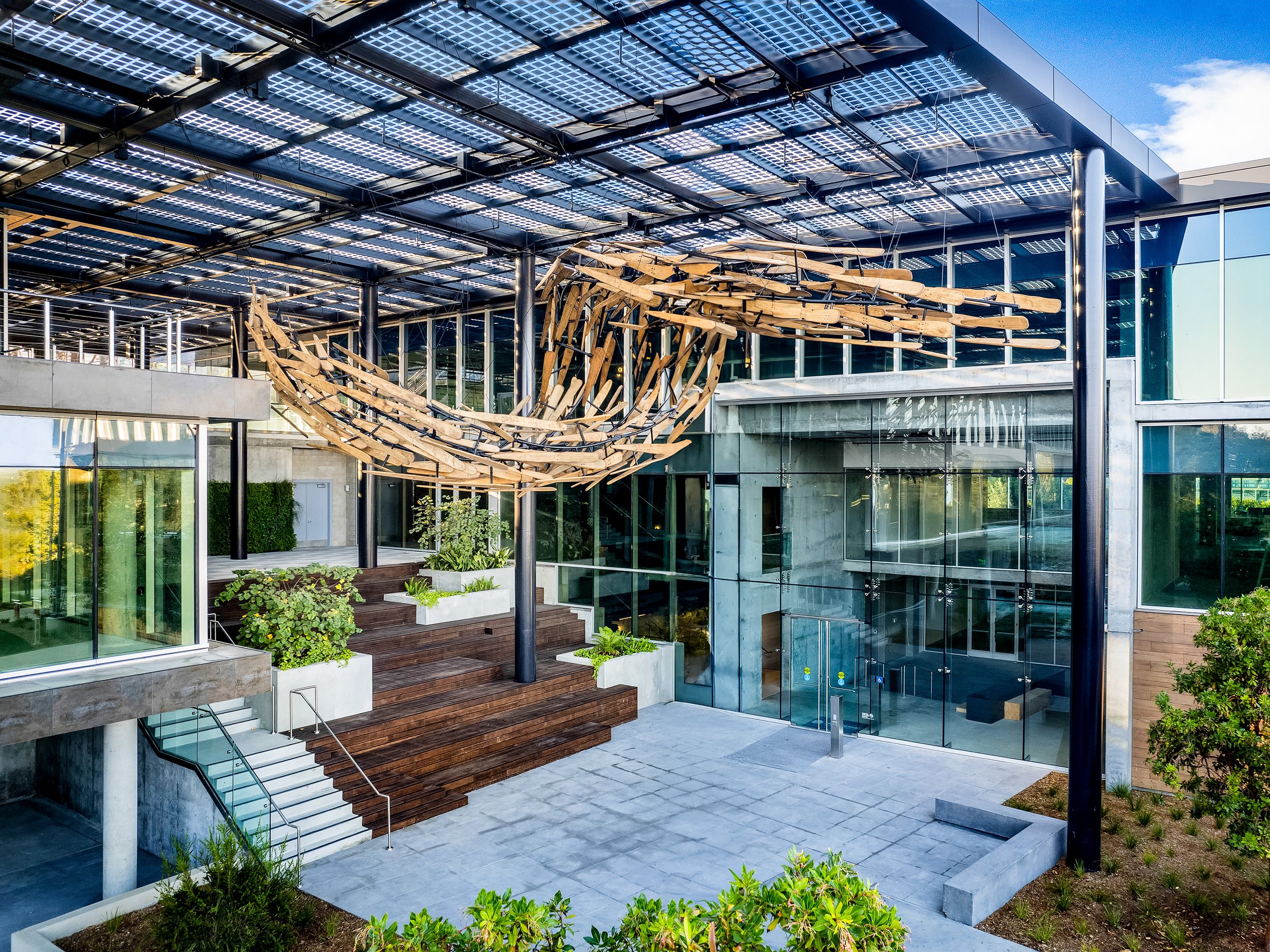
Where Movement becomes a Pattern
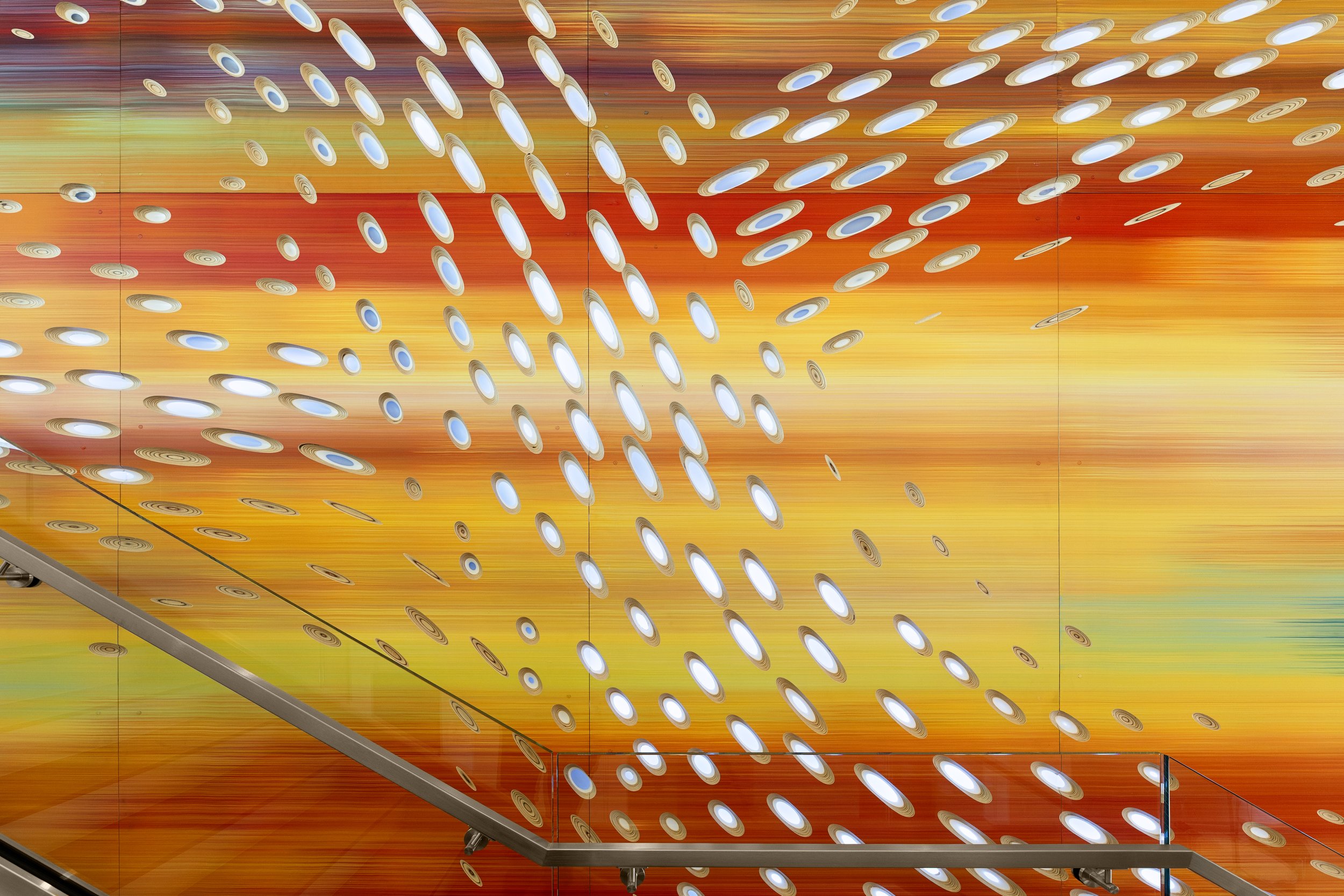
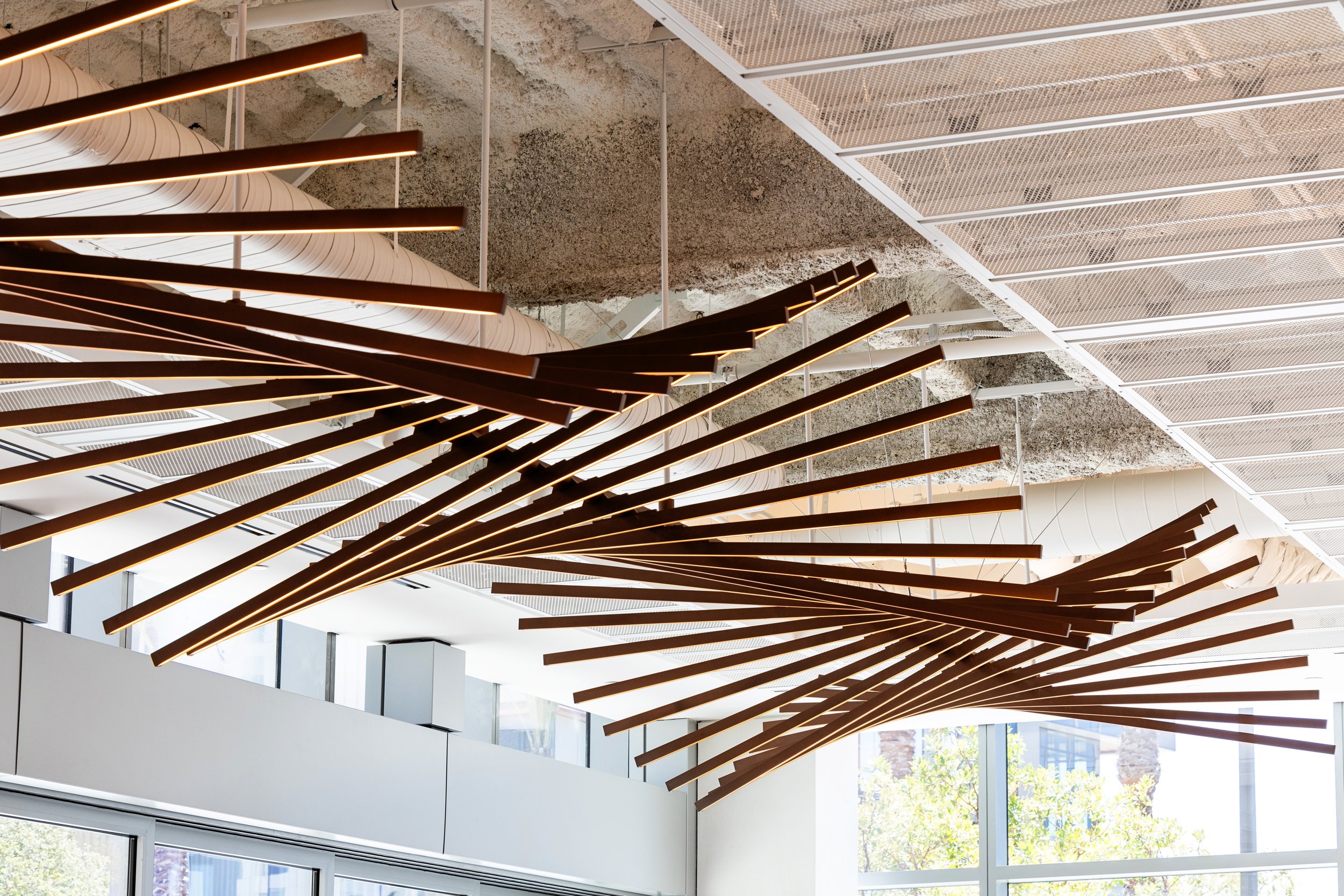
Patterns, repetition, and movement - what we often refer to as a “swarm” or “flock” - show up frequently in our projects. Over the years, we’ve developed a sense of how these ideas work in a physical space, and how to maintain both the visual impact and practical feasibility.
Fabrication as a Collaborative Process
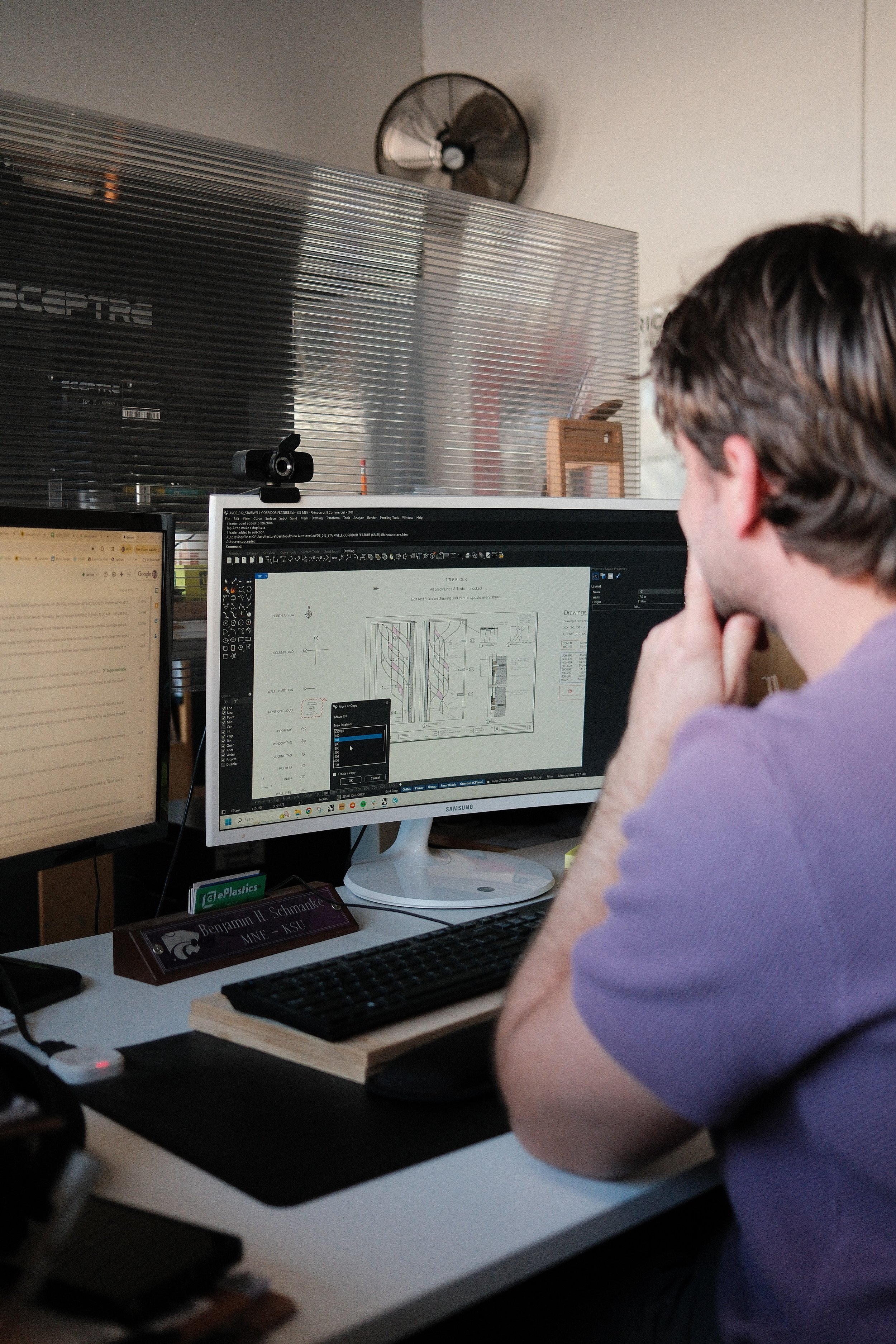
Once a design is ready, it moves to the technical team. Here, every detail - from hardware to lighting integration - are carefully considered. The overall goal is to make sure that when the fabricators start building, nothing compromises the original idea.
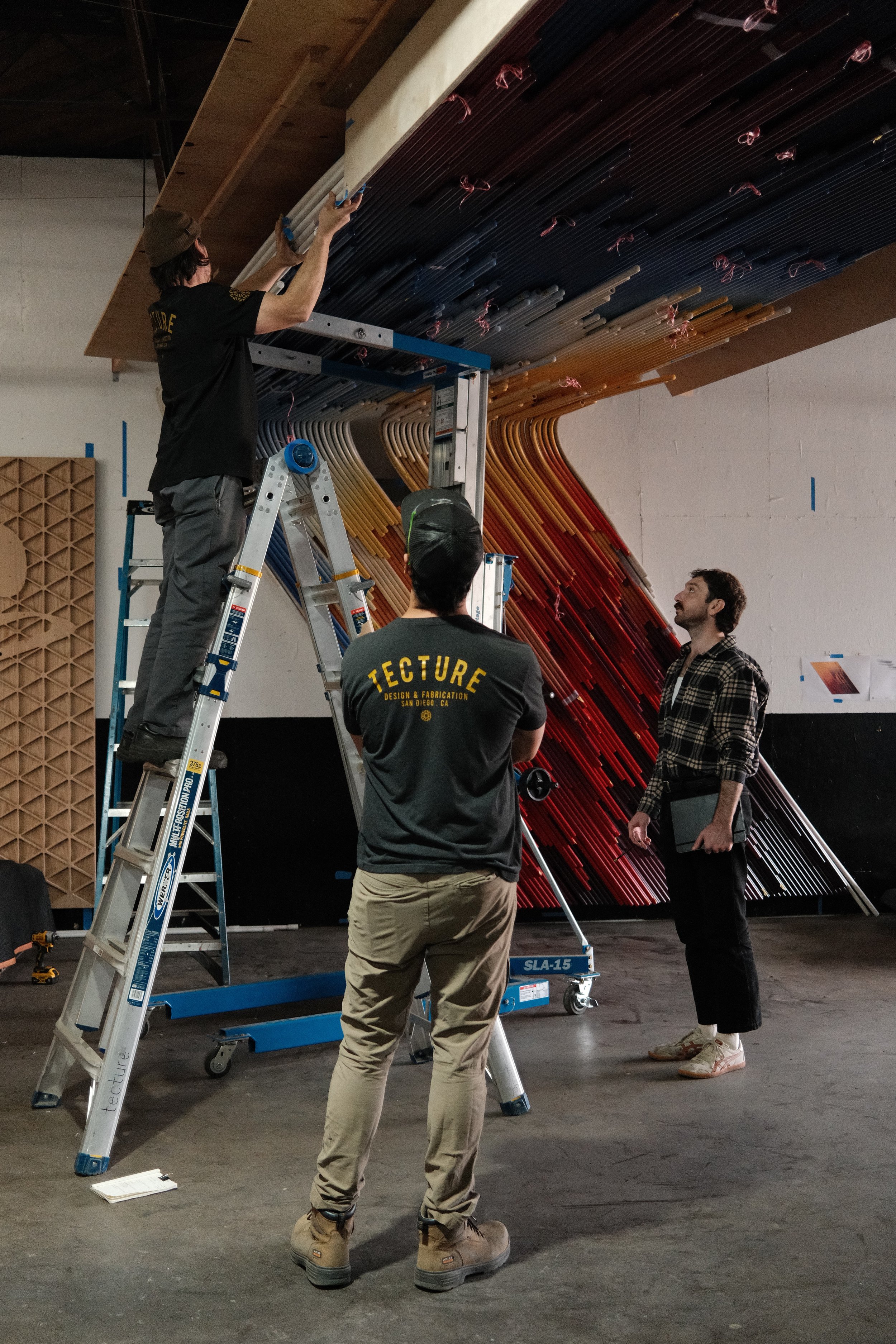
Our fabrication team - comprising of technical designers and skilled fabricators - are both thinkers and problem solvers. They bring years of experience to the shop and on-site, making informed decisions that keep work moving forward without compromising design integrity.
Adjustments often arise on the fly, and the team knows which elements are essential and where there’s room for flexibility. When larger changes occur during construction, our designers and project managers collaborate closely with the fabricators to develop solutions that preserve the creative intent, maintain the schedule, and respect the budget.
It’s a continuous dialogue between idea and execution.
Creative Problem Solving
At Tecture, every project is an exercise in problem-solving. Architects and developers come to us because we thrive on complex ideas and unexpected challenges, all while maintaining design integrity.
Some recent projects that showcase our approach include:
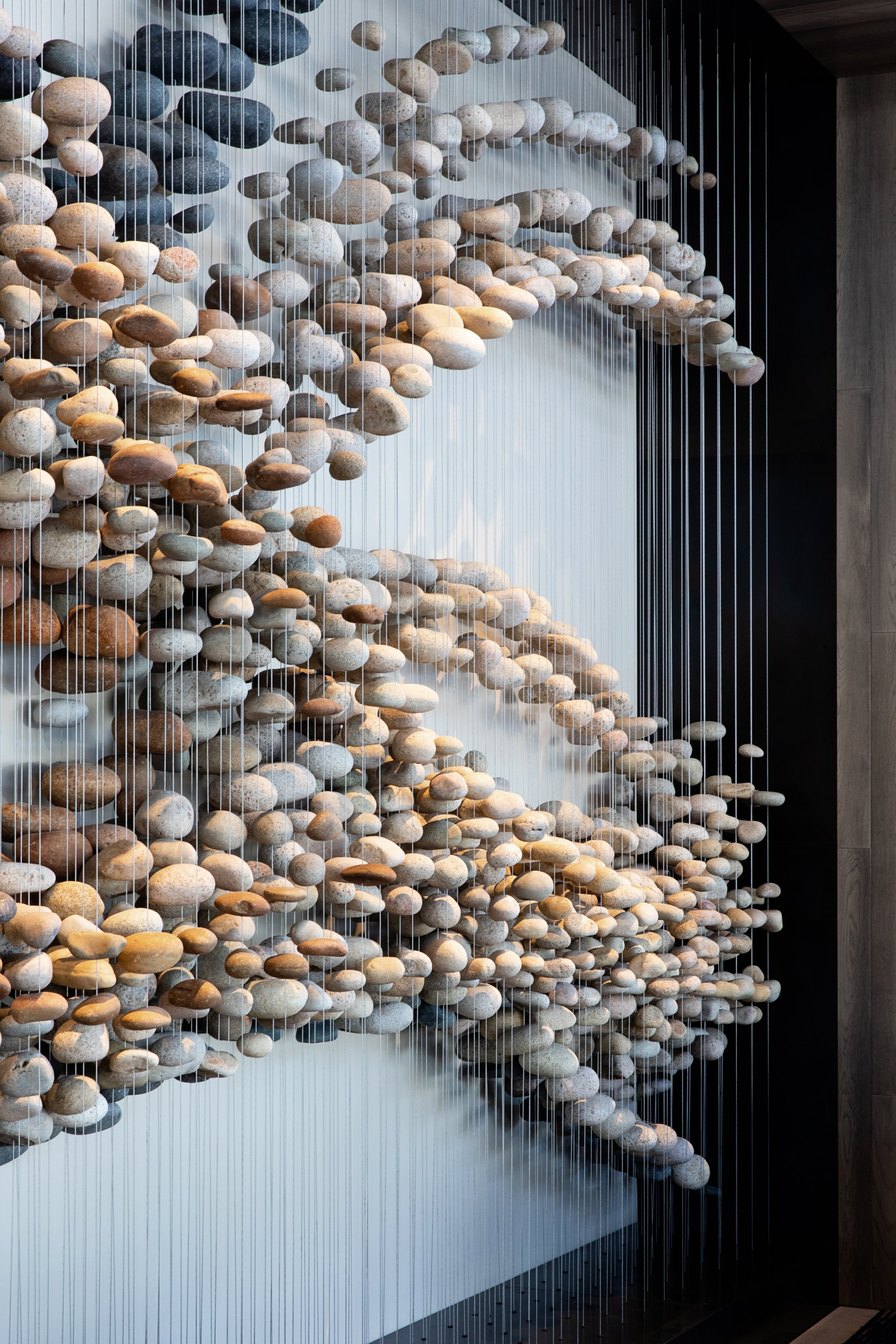
STONE FLOCK
A heavy art installation exploring repetition and movement, crafted from a natural material that doesn’t behave predictably
UCSD
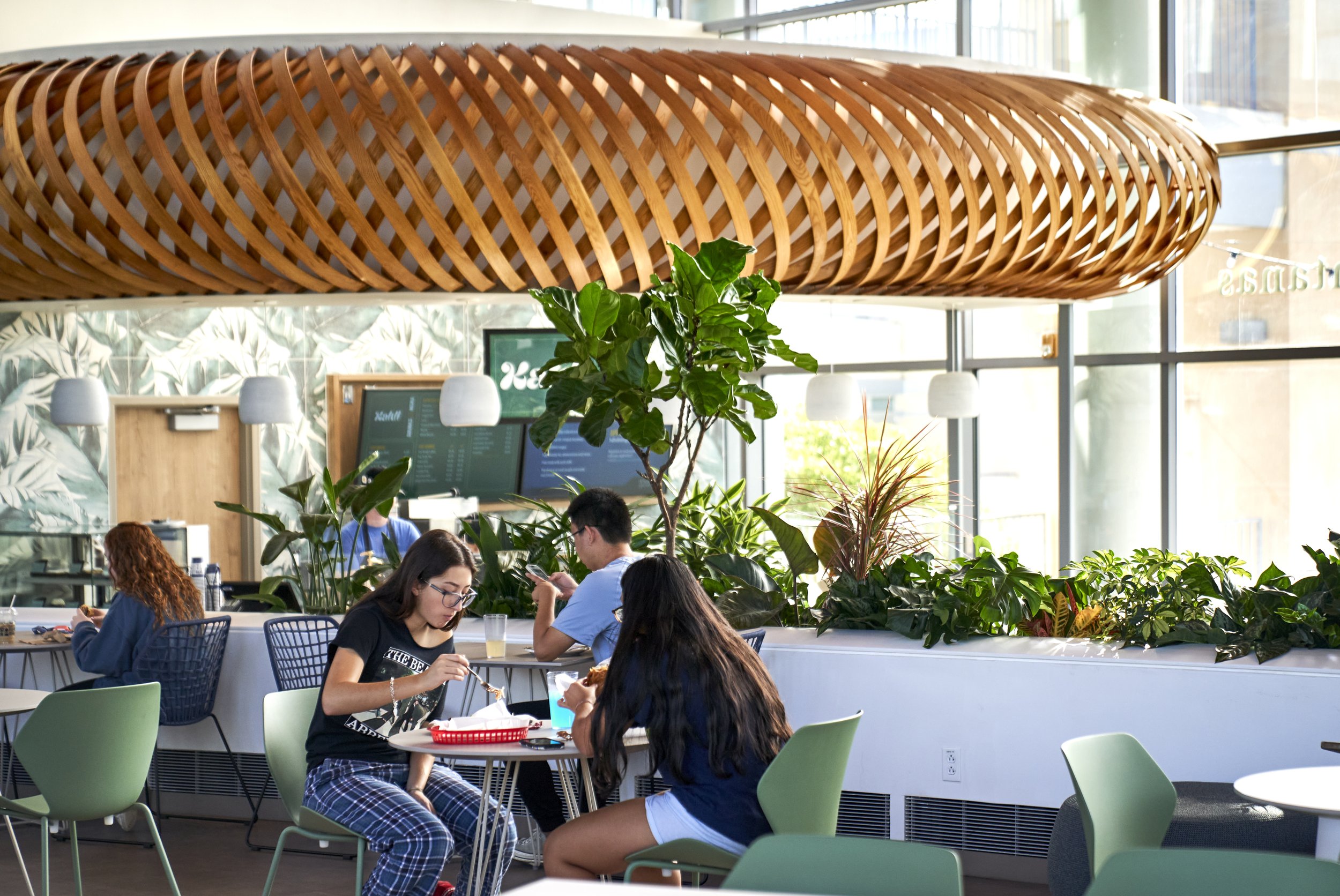
A seemingly simple material bent and painted with integrated lighting. We completed a full-scale build to test it before installation on site, which we were glad we did - it helped us eliminate a problem that came up during testing.
Stay tuned for final photos!
DATA FIELD
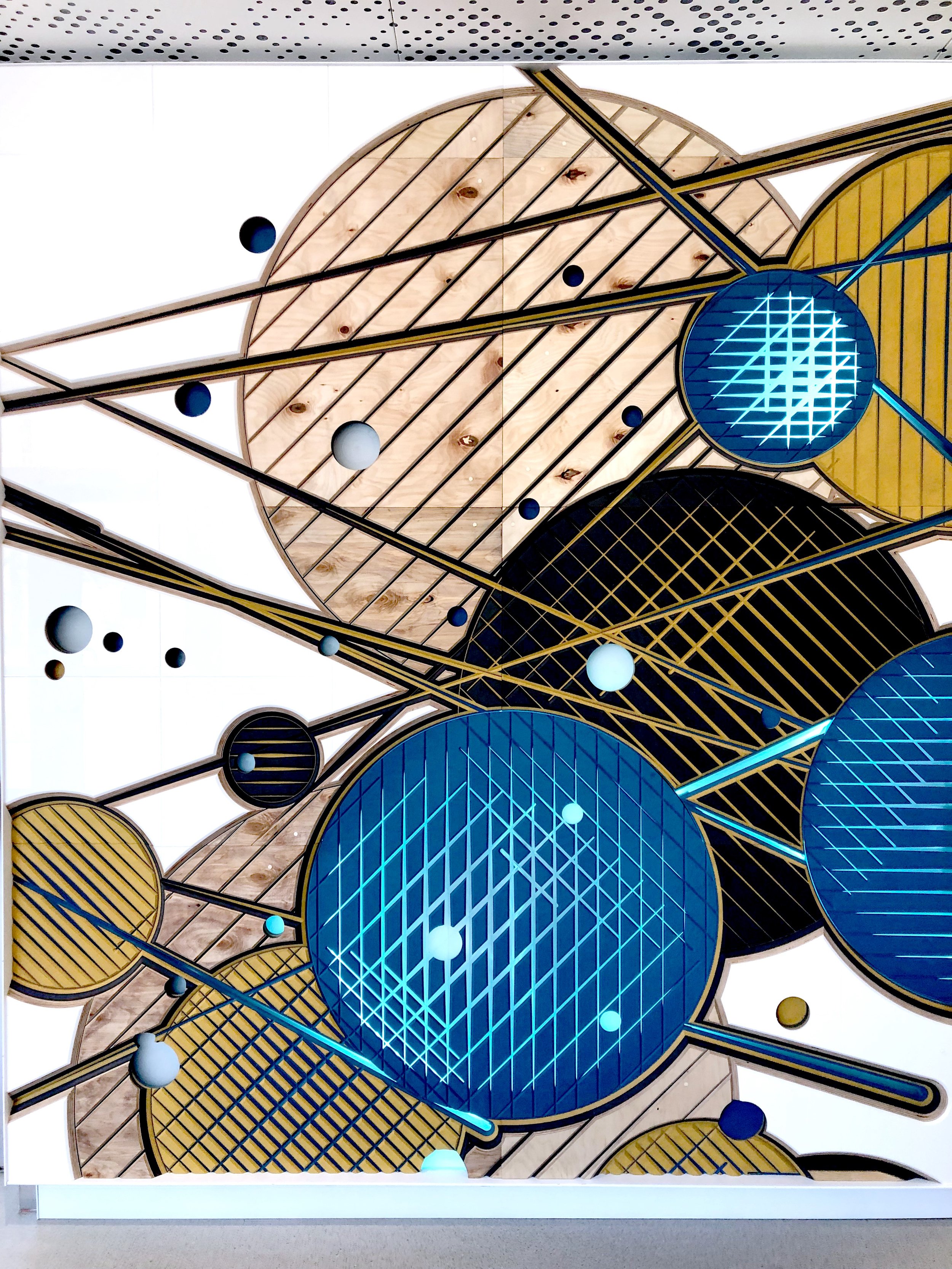
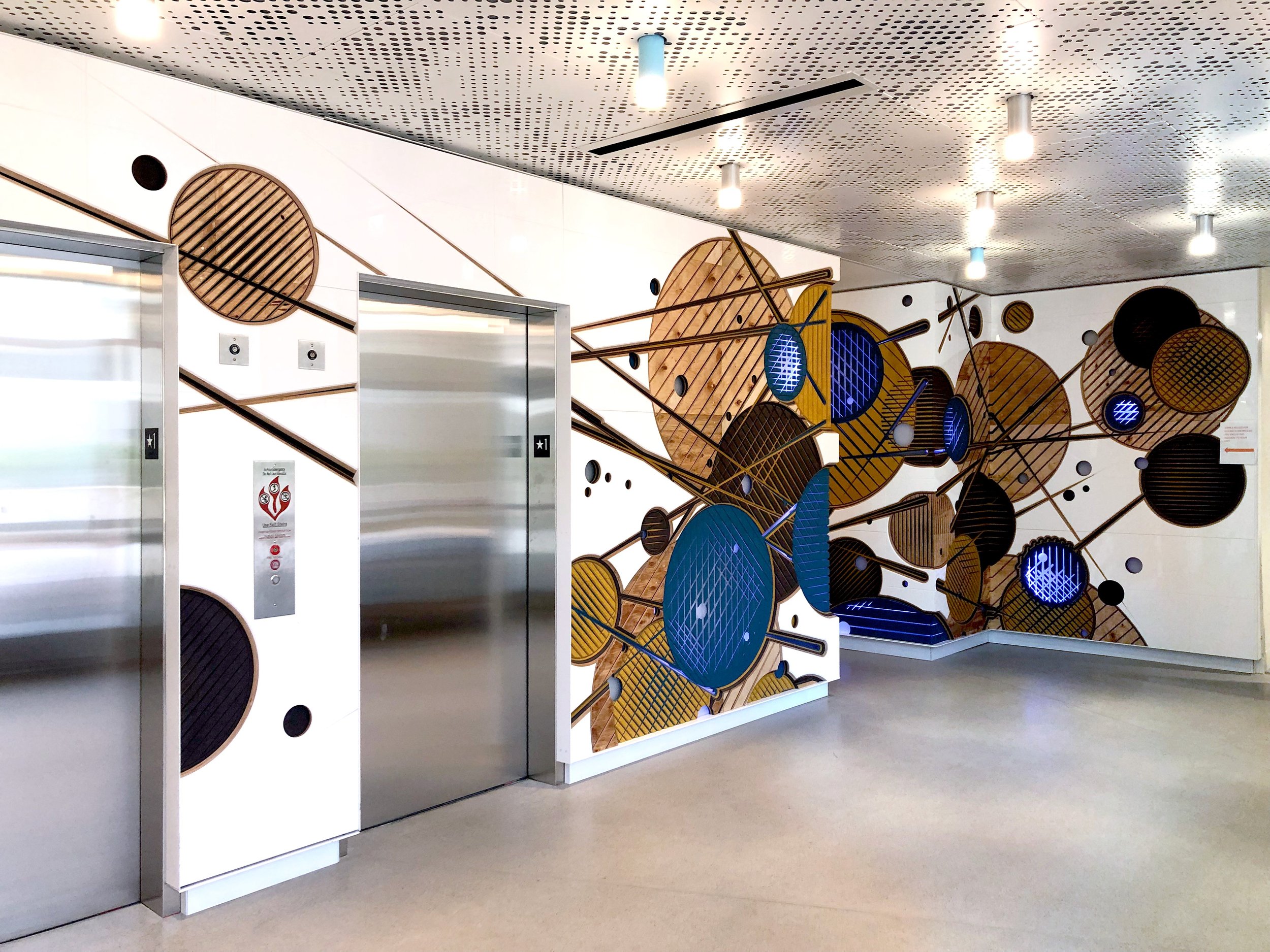
Large-scale architectural art that combines technical precision with durability, designed for a high-traffic campus hallway.
MIGRATION
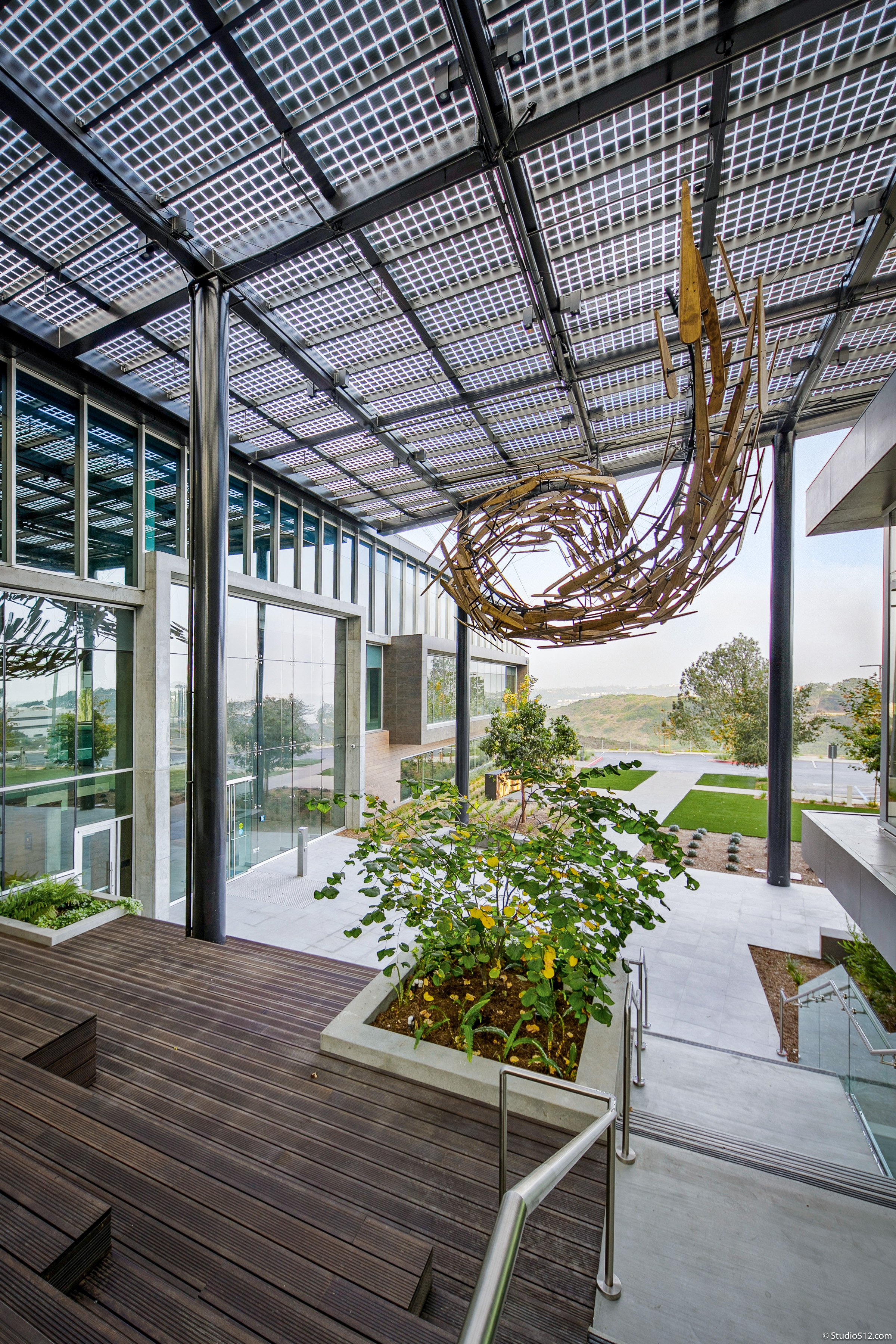
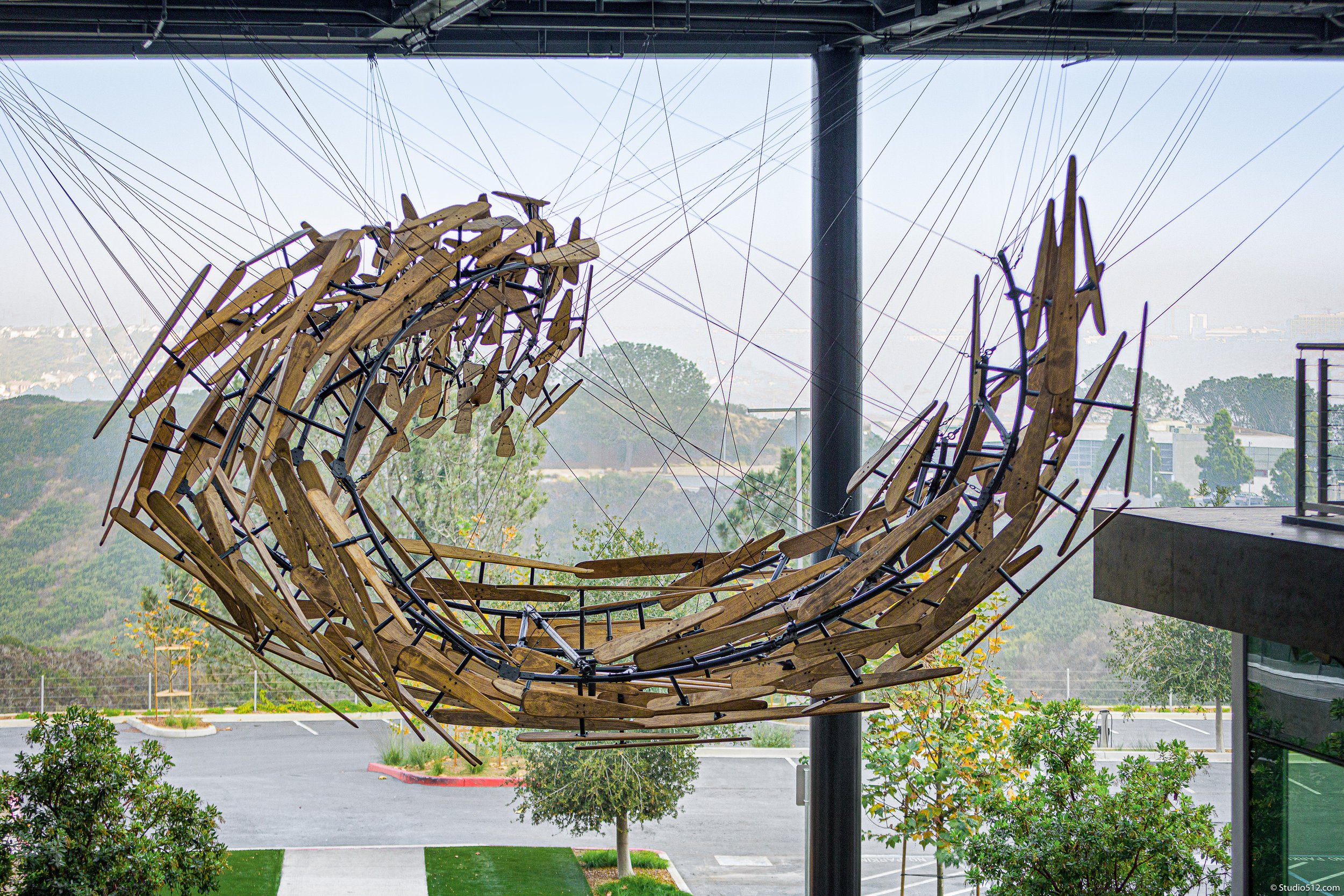
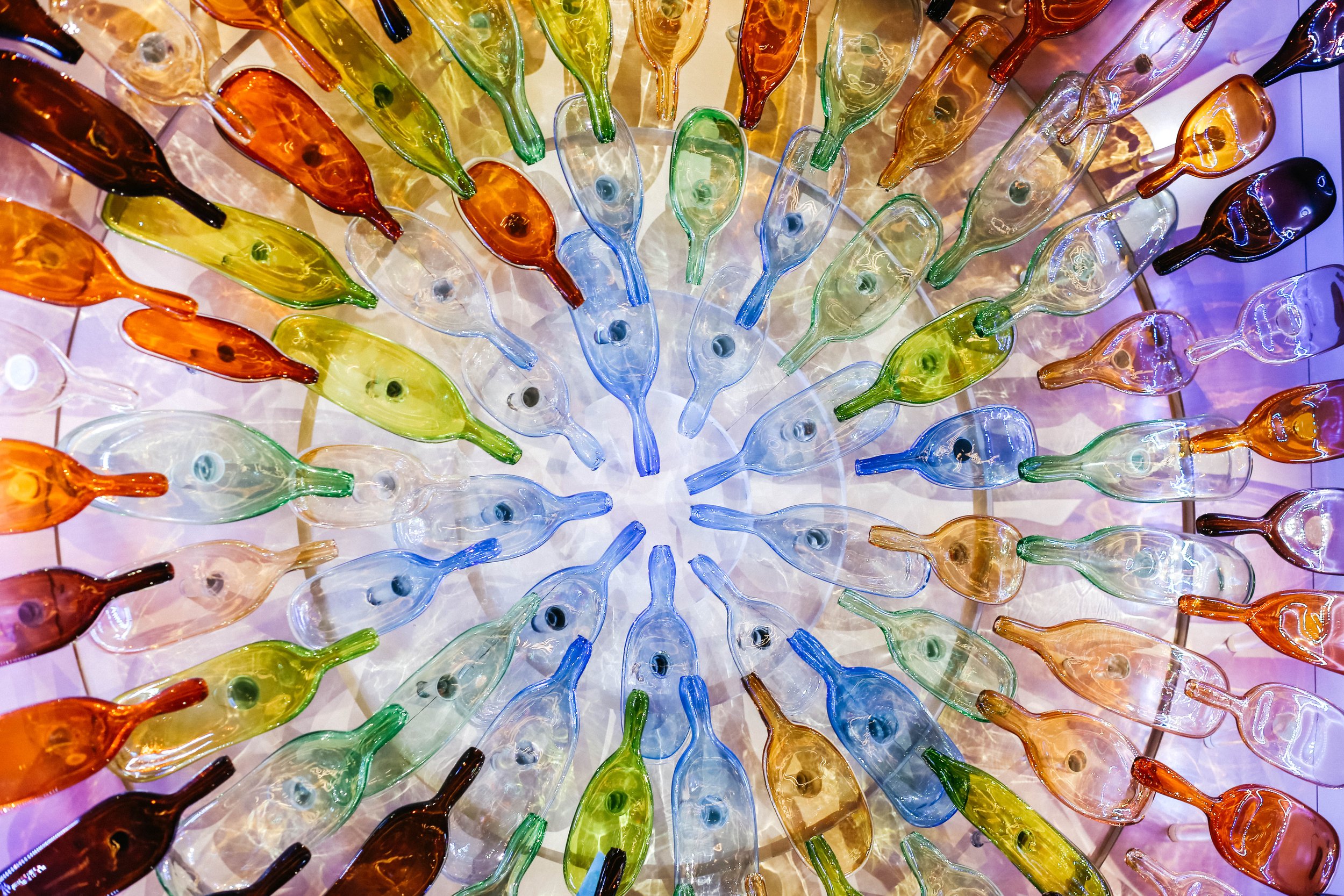
A large hanging installation that required a complete shop build before being installed on site.
Color Wall
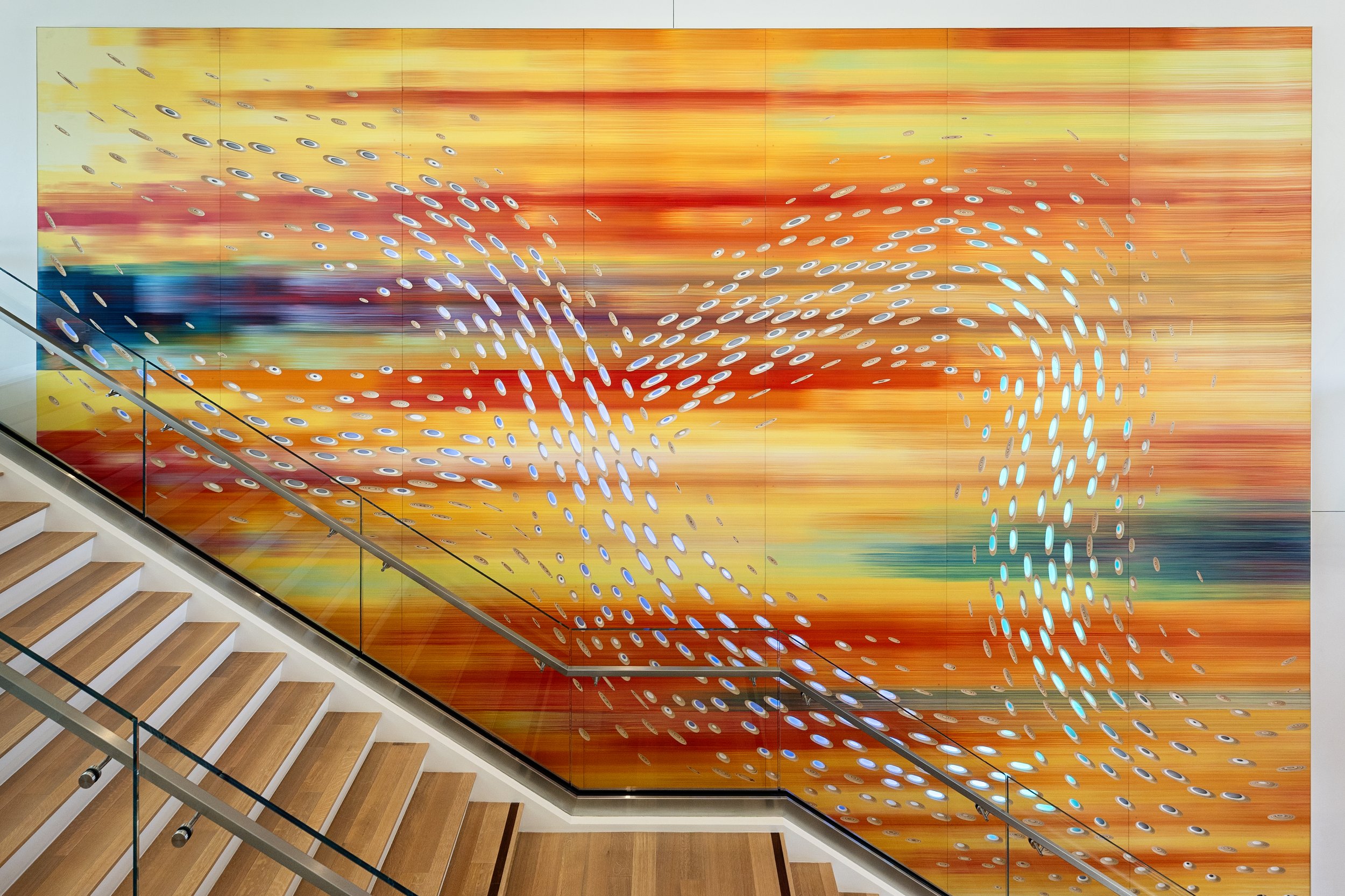
One project we’re particularly proud of involved creating a sunset-inspired feature for a lobby staircase. This required designing a whole new process to bring the concept to life, balancing creative intent with technical execution—a clear example of how design and fabrication can work seamlessly together.
The TECTURE Approach
What defines our work is the combination of concept, craft, and collaboration. Every feature is an opportunity to turn an idea into something built, functional, and memorable. The process—seeing an abstract concept become a real, immersive experience—is at the heart of what we do.


FAQs
1. When should we bring Tecture into a project?
The earlier, the better. Many of our most successful installations begin at the conceptual stage. Involving us early allows us to guide material choices, structural logic, lighting integration, and budget considerations before they become constraints.
2. Do you only fabricate, or do you help develop the design?
We do both. Some projects come to us fully designed; others arrive as sketches, references, or abstract ideas. We help translate those concepts into buildable solutions while preserving the original creative intent.
3. Can you work with our architect or interior designer?
Absolutely. Collaboration is central to our process. We regularly work alongside architects, designers, developers, and lighting consultants to ensure seamless coordination from concept through installation.
4. How do you ensure an installation is structurally sound and code-compliant?
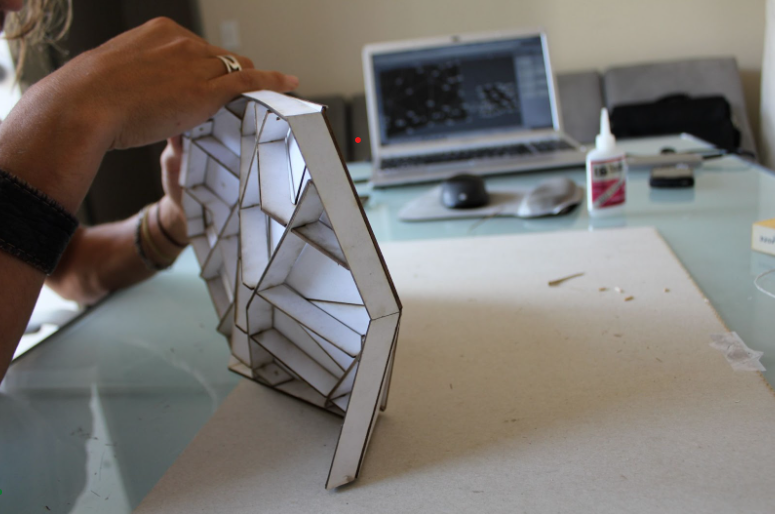
Our technical design team develops detailed drawings and engineering strategies before fabrication begins. We coordinate with engineers when required and conduct full-scale mockups or test builds when necessary—especially for complex or suspended installations.
5. What types of materials do you typically work with?
We work with a wide range of materials including wood, metal, stone, acrylic, PVC, and integrated lighting systems. Material selection depends on the concept, environment, and performance requirements.
6. Do you build full mockups before installation?
When needed, yes. For complex installations—especially those involving lighting, suspension, or unconventional materials—we often complete partial or full-scale builds in our shop to test performance before going on site.
7. How do you handle changes during construction?
Adjustments are part of the process. Our fabrication team works closely with designers and project managers to solve issues quickly while protecting the design intent, schedule, and budget.
8. What types of spaces do you create installations for?
We’ve developed installations for hospitality spaces, university campuses, corporate environments, residential projects, and public spaces. Each context requires a different approach to durability, scale, and user interaction.
9. How long does an art installation project typically take?
Timelines vary depending on scale and complexity. Smaller features may take a few weeks from final design approval to installation, while larger or technically complex projects can take several months. Early coordination helps streamline the schedule.
10. What makes Tecture different from other fabricators?
We operate at the intersection of design and fabrication. With both disciplines under one roof, we reduce friction between idea and execution. Nothing gets lost in translation, and the final installation stays true to its original vision.